Web technology · Native app stores

Hybrid mobile app development that reuses the web code you already have.

Already have a web app built in Angular, React or Vue? We wrap and extend it with Ionic and Capacitor into real iOS and Android apps, with push notifications, offline support and native features, at a fraction of the cost of a full rebuild.

  • Free 30-minute consultation
  • NDA on request
  • Clear fixed quote
0+Years of experience
0+Projects delivered
0Countries served
0 minFree discovery call
What is a hybrid app

Your web app, now in every pocket.

A hybrid mobile app runs your web technologies (HTML, CSS and JavaScript) inside a native shell. With modern tools like Capacitor, that shell gives your app access to the camera, file system, biometrics and push notifications, and it is published on the App Store and Google Play like any other app.

Hybrid development is the fastest and most affordable route when you already have a working web product, or when your app is mostly forms, dashboards and content. We are honest about the limits too: for heavy animation or advanced hardware, we will recommend Flutter, React Native or native code instead.

Reuse existing code

Keep your web components, logic and design system.

Fastest route to stores

Often weeks, not months, to a store-ready app.

Native features

Camera, push, biometrics and files through Capacitor plugins.

Offline support

Local storage and sync for patchy connections.

Our services

Hybrid app development services.

From packaging a PWA to building a full Ionic app.

🧩

Ionic app development

Complete hybrid apps with Ionic UI components that adapt to iOS and Android.

⚡

Capacitor integration

Add Capacitor to your existing Angular, React or Vue app and ship it to both stores.

🌐

Website to app conversion

Turn a responsive web portal into an installable app with offline and push.

📶

Progressive Web Apps

Installable PWAs with service workers for users who prefer not to download from stores.

🔌

Custom native plugins

Swift and Kotlin plugins when a standard plugin is not enough.

🔄

Cordova to Capacitor migration

Move ageing Cordova apps to Capacitor for better performance and support.

What we build

Hybrid app development options explained.

'Hybrid' covers several approaches. We'll recommend the one that fits your budget and the experience your users expect.

Web technology, packaged as a real app

Ionic with Capacitor lets your web team build apps in Angular, React or Vue, published on both stores. It's ideal for content-rich, form-heavy and internal business apps.

What you get

  • Ionic UI components that feel native
  • Capacitor plugins for camera, files and push
  • Angular, React or Vue codebase
  • Offline storage and background sync
  • App Store and Google Play publishing
  • Live updates for web code where allowed

Technology

IonicCapacitorAngularReactVueTypeScriptSQLiteAppflow
Example use case

Insurance agent app

Problem
Agents needed policy forms and documents on the go, and the company's web team only knew Angular.
Our solution
An Ionic Angular app reusing existing web components, with offline forms and document upload.
Expected outcome
Mobile launched by the existing team, with forms that work without a signal.

App-like experiences from the browser

PWAs install from the browser, work offline and send notifications, with no app store needed. They suit e-commerce, content and markets where users are reluctant to download apps.

What you get

  • Installable PWA with home screen icon
  • Service workers for offline use
  • Web push notifications
  • Fast loading on slow networks
  • SEO-friendly pages
  • Optional store packaging with TWA

Technology

Next.jsWorkboxService WorkersWeb PushIndexedDBLighthouse
Example use case

Retail PWA

Problem
A retailer's mobile shoppers wouldn't download an app for occasional purchases.
Our solution
A fast PWA storefront with offline catalogue browsing, saved carts and push offers.
Expected outcome
An app-like shopping experience without the download barrier.

Turn your existing website into an app

If you already have a strong mobile website, we can wrap it in a native shell with added app-only features like push notifications, biometrics and offline screens, to meet store guidelines.

What you get

  • Native shell with web content
  • Push notifications and deep links
  • Native navigation and splash screens
  • Biometric login
  • Offline fallback screens
  • Store compliance review

Technology

CapacitorSwiftKotlinFirebase Cloud MessagingOneSignal
Example use case

News publisher app

Problem
A publisher wanted an app presence without rebuilding its CMS-driven site.
Our solution
A native shell around the mobile site with push alerts for breaking news and saved articles offline.
Expected outcome
A store-listed app that reuses the existing CMS and newsroom workflow.

When your hybrid app has outgrown its tech

Old Cordova or PhoneGap apps can be slow and hard to update. We upgrade them to Capacitor, or move key screens to Flutter or React Native when performance matters.

What you get

  • Technical audit of the current app
  • Cordova to Capacitor migration
  • Plugin replacement and updates
  • Performance profiling and fixes
  • Rebuild plan for heavy screens

Technology

CordovaCapacitorFlutterReact NativeCrashlytics
Example use case

Legacy Cordova app

Problem
An education app on Cordova was failing store updates and crashing on new phones.
Our solution
Migration to Capacitor, updated plugins and rebuilt video screens.
Expected outcome
The app passes store reviews again and runs reliably on current devices.
Who it's for

When a hybrid app is the smart choice.

Great for products that are mostly content, forms and dashboards.

🔐Portals

Customer & member portals

Give existing web users a mobile app for account, billing and support features.

  • Single sign-on with your website
  • Push notifications for updates
  • Biometric login
🧰Internal tools

Internal business apps

Turn internal web dashboards into apps for staff in the field or on the shop floor.

  • Offline forms and sync
  • Barcode and QR scanning
  • Photo capture and upload
🎓Education

Learning & school apps

Bring LMS and school portal features to students and parents on their phones.

  • Timetables, homework and results
  • Notifications from teachers
  • Low-data mode
🎟️Events

Event & community apps

Agenda, tickets and networking features for conferences and communities.

  • QR ticket check-in
  • Live schedule updates
  • Attendee messaging
Use cases

When hybrid apps make sense.

Common business problems, the solution we build and the outcome it is designed to deliver.

📝

Form-heavy business apps

Problem: Staff need forms, checklists and documents on mobile.

Solution: An Ionic app with offline forms and sync.

Result: Paperless workflows without a large native budget.

👨‍💻

Web team, no mobile team

Problem: Your developers only know web technologies.

Solution: Hybrid stack that uses Angular, React or Vue skills.

Result: Your team can build and maintain the app.

🛍️

Occasional shoppers

Problem: Customers won't download an app for rare purchases.

Solution: A PWA they can use instantly from the browser.

Result: Mobile conversions without download friction.

📰

Content publishing

Problem: You publish a lot of content managed in a CMS.

Solution: A hybrid app pulling content from your CMS.

Result: No duplicate content work for the app.

🏢

Internal tools

Problem: Employees need simple apps for approvals and requests.

Solution: Hybrid apps distributed privately or via MDM.

Result: Fast rollout across the company.

💸

Tight budget

Problem: You need both platforms with limited funds.

Solution: Shared web code for iOS, Android and web.

Result: Lower cost than separate native builds.

Future-ready innovation

End-to-end technology practices.

Most engagements combine three or four practices. A digital transformation project may draw on AI, application development, cloud and security together.

Our process

How we deliver hybrid apps.

Reuse first, rebuild only where it adds value.

  1. Week 0–1

    Code audit

    We review your web app to see what can be reused and what needs changing.

  2. Week 1–2

    Mobile UX pass

    Navigation, touch targets and screens adapted for phones.

  3. Weeks 2–4

    Native shell setup

    Capacitor or Ionic project, plugins, icons and splash screens.

  4. Weeks 3+ (2-week sprints)

    Feature build

    Push, offline, biometrics and any custom native plugins.

  5. Before launch

    Testing

    Real-device testing for performance, layout and store rules.

  6. Launch & ongoing

    Store launch

    Submission to both stores and an update process for future releases.

Portfolio

Products we design and build.

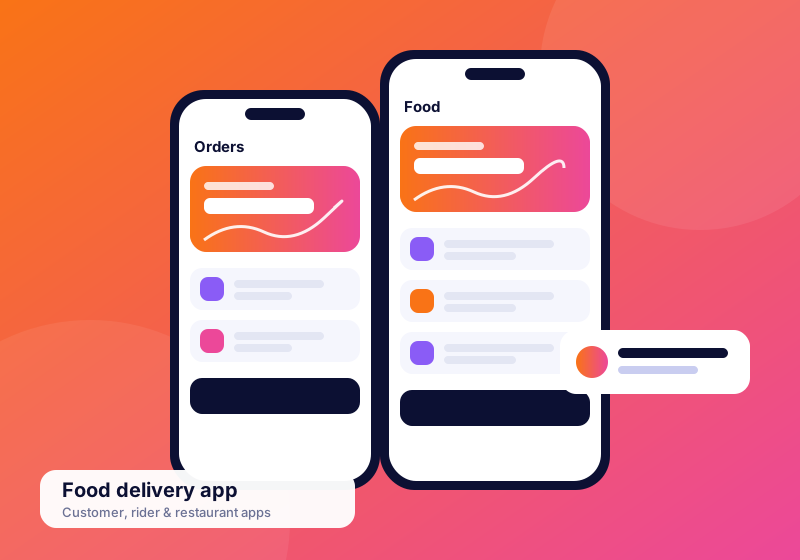
Food delivery platform built by UD3 Logic – Flutter · Node.js · Maps

Food delivery platform

Flutter · Node.js · Maps
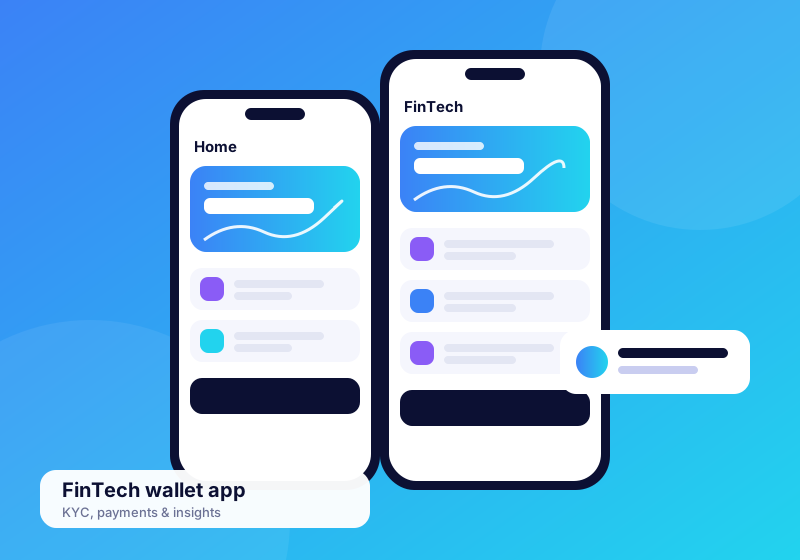
Digital wallet app built by UD3 Logic – React Native · KYC · Security

Digital wallet app

React Native · KYC · Security
Telemedicine app built by UD3 Logic – Flutter · Video · e-Prescriptions

Telemedicine app

Flutter · Video · e-Prescriptions
Fashion e-commerce store built by UD3 Logic – Shopify · Headless · Payments

Fashion e-commerce store

Shopify · Headless · Payments
Logistics & fleet platform built by UD3 Logic – Node.js · Live tracking · IoT

Logistics & fleet platform

Node.js · Live tracking · IoT
Smart farming app built by UD3 Logic – Weather · Crop advisory · Markets

Smart farming app

Weather · Crop advisory · Markets
School ERP built by UD3 Logic – Laravel · React · Parent app

School ERP

Laravel · React · Parent app
Technology stack

Hybrid app technology stack.

Frameworks

Ionic, Capacitor, Cordova (migration)

Web layer

Angular, React, Vue, TypeScript

Native

Swift and Kotlin plugins, SQLite

Services

Firebase, OneSignal, Appflow, Sentry

Cost & timeline

Hybrid mobile app development cost

Hybrid apps are usually the most budget-friendly way to reach both app stores, especially when your web app is already built. Your quote depends on:

  • How much of your web code can be reused
  • Number of native features (push, camera, offline)
  • Mobile UX changes needed
  • Custom native plugins
Get your free estimate

Progressive web app (PWA)

Timeline4–8 weeks

Installable, offline-capable web app with push notifications.

Ionic / Capacitor business app

Most popular
Timeline6–12 weeks

iOS + Android app with offline forms, sync and admin.

Website-to-app conversion

Timeline3–6 weeks

Native shell, push, deep links and store-compliant app features.

Cordova to Capacitor migration

Timeline3–8 weeks

Audit, plugin updates, migration and store resubmission.

Maintenance & updates

TimelineOngoing

OS updates, plugin upgrades, fixes and store compliance.

Every project is different. Book a free 30-minute call and get a clear, itemised quote with milestone-based payments.

Engagement models

Six ways to work with us.

Pick the model that fits your budget, timeline and team, and switch as the project grows.

01

Discovery & prototype sprint

Best for
Validating an idea before full investment
Duration
2–3 weeks
Team
Analyst, designer, architect
Pricing
Fixed fee
02

Fixed-scope project

Best for
Clear requirements and a defined launch date
Duration
6–20 weeks
Team
Full project team
Pricing
Milestone payments
03

Dedicated team

Best for
Ongoing product development with changing priorities
Duration
3 months+
Team
2–8 engineers + PM
Pricing
Monthly per team
04

Hire developers

Best for
Adding skills to your in-house team quickly
Duration
1 month+
Team
1 or more developers
Pricing
Monthly per developer
05

Long-term product partnership

Best for
Roadmap ownership from launch to scale
Duration
12 months+
Team
Cross-functional pod
Pricing
Monthly retainer
06

Support & maintenance

Best for
Keeping a live product secure, fast and updated
Duration
Ongoing
Team
Support engineers
Pricing
Monthly plan with SLA
Our commitments

Eight promises we put in writing.

What working with UD3 Logic looks like compared with a typical vendor.

  1. 01

    One accountable partner

    With UD3 LogicDesign, development, QA, cloud and support under one roof, with one project lead you can call.
    Typical vendorSeveral freelancers or vendors, and no single owner when something breaks.
  2. 02

    NDA first

    With UD3 LogicWe sign an NDA before you share detailed plans or data.
    Typical vendorIdeas and documents shared before any agreement is in place.
  3. 03

    You own everything

    With UD3 LogicFull source code, designs, accounts and IP are transferred to you, in your repositories.
    Typical vendorCode held on the vendor's servers, with hand-over fees or lock-in.
  4. 04

    Design before code

    With UD3 LogicClickable prototypes approved by you before development starts.
    Typical vendorDevelopment starts from a document, and surprises appear at the end.
  5. 05

    Weekly demos

    With UD3 LogicWorking software every week or every sprint, on a test link you can try.
    Typical vendorLong silences, then a big reveal near the deadline.
  6. 06

    Milestone payments

    With UD3 LogicPay against agreed deliverables, not upfront for the whole project.
    Typical vendorLarge advance payments with little visibility.
  7. 07

    Quality built in

    With UD3 LogicCode reviews, automated tests and security checks in every sprint.
    Typical vendorTesting squeezed in after development, if at all.
  8. 08

    Support after launch

    With UD3 LogicFree 30-day warranty period, then flexible maintenance plans.
    Typical vendorThe team moves on and bug fixes become new paid projects.
Why businesses choose us

More than development. A product partner built for growth.

Experienced developers, modern technology and quality assurance for faster execution with fewer surprises.

01
Product thinking

We solve the right problem before writing the first line of code.

We align business goals, user needs, priorities and technical direction before development begins, so every feature has a clear purpose.

02
Architecture

Built to handle today and designed for what comes next.

Modular, scalable foundations that support more users, new features and integrations without forcing expensive rebuilds later.

03
Security by design

Security is built into the product, not added at the end.

Data protection, access control, API architecture and secure development practices are treated as a core part of the product.

04
Transparent execution

You always know what is being built, why it matters and what comes next.

Clear milestones, regular reviews and honest communication keep your team aligned and remove unnecessary surprises.

05
Continuous support

Launch is not the finish line. It is the start of the next growth stage.

We stay involved with optimisation, maintenance, enhancements and scaling so your product keeps evolving with the business.

Case studies

How we solve real business problems.

Each case study shows the challenge, what we built and the technology behind it.

On-demand food delivery platform – UD3 Logic case study
Sample – replace with a real client project
UAEFlutterNode.js

On-demand food delivery platform

The challenge
A restaurant group needed its own ordering channel instead of paying high aggregator commissions.
What we built
Customer, rider and restaurant apps in Flutter with live tracking, Arabic/English UI and a web admin panel.
Tech stack
Flutter, Node.js, Firebase, Google Maps
Discuss a similar project
Digital wallet for a lending startup – UD3 Logic case study
Sample – replace with a real client project
IndiaReact NativeUPI

Digital wallet for a lending startup

The challenge
Users dropped off during a slow, paper-based KYC process.
What we built
A React Native wallet with video KYC, UPI payments, biometric login and an EMI dashboard.
Tech stack
React Native, UPI, AWS, Biometrics
Discuss a similar project
Industries

Deep experience across business verticals.

🏥

Healthcare

Telemedicine, clinic and lab software, patient apps and HIPAA/ABDM-aware data handling.

TelehealthEMRPharmacy
🎓

Education

School ERP, LMS, online classes, fee collection and parent-teacher apps.

School ERPLMSEdTech
🛍️

Retail & E-commerce

Online stores, marketplaces, POS integrations and loyalty programmes.

D2CMarketplacePOS
🏦

Finance & FinTech

Wallets, lending, payments and investment platforms with strong security.

WalletsLendingKYC
🚚

Logistics & Transport

Fleet tracking, delivery apps, shipping portals and warehouse systems.

FleetTMSDelivery
🏨

Travel & Hospitality

Hotel booking, property management, tours and restaurant ordering.

BookingPMSF&B
🏠

Real Estate

Property portals, CRM for brokers, virtual tours and rental management.

PortalsCRMRentals
🏭

Manufacturing & Energy

Production tracking, maintenance, IoT dashboards and oil & gas field apps.

IoTERPField apps
Trends for 2026

Hybrid app trends for 2026.

01

Capacitor replaces Cordova

Most new hybrid apps use Capacitor, and Cordova apps are being migrated for security and store compliance.

02

Better PWA support on iOS

Web push and home screen installs on iPhone make PWAs viable for more businesses.

03

Stricter store reviews

Apple and Google reject thin website wrappers, so hybrid apps need real app features.

04

Web components everywhere

Shared component libraries power web, hybrid apps and marketing sites at once.

05

Offline-first expectations

Users expect apps to keep working on trains, in lifts and in rural areas.

06

Performance budgets

Teams set limits on bundle size and load time so hybrid apps stay fast.

Where we work

Hybrid Mobile App Development for clients across 10 countries.

Hybrid apps are a cost-effective way to reach users in many countries quickly, with translations and RTL support reused from your website.

US

USA

Stripe and Apple Pay, WCAG accessibility and HIPAA-aware design for health apps; calls in EST, CST or PST hours.

GB

UK

UK GDPR and Data Protection Act 2018 compliant apps, Open Banking-ready FinTech flows and GBP payments.

AE

UAE

Bilingual Arabic/English apps with RTL layouts, UAE PDPL-aware data handling, UAE Pass login and local gateways.

SA

Saudi Arabia

Arabic-first apps with mada and STC Pay, Hijri calendar support and data storage planned for Saudi PDPL rules.

QA

Qatar

Arabic and English apps for Doha businesses, built with Qatar's Law No. 13 of 2016 on personal data in mind.

OM

Oman

RTL Arabic apps for Muscat that follow Oman's Personal Data Protection Law (Royal Decree 6/2022).

AU

Australia

Apps aligned with the Australian Privacy Principles, with Stripe and Afterpay; calls around AEST.

NZ

New Zealand

Apps for Auckland and Wellington that follow the Privacy Act 2020, with Windcave or Stripe payments.

ID

Indonesia

Bahasa Indonesia apps with GoPay, OVO and DANA, tuned for budget Android phones and the PDP Law 27/2022.

IN

India

UPI and Razorpay, Hindi and regional languages, low-bandwidth performance and DPDP Act 2023 alignment.

Client testimonials

What our clients say about us.

"What impressed us most about UD3 Logic was their ability to understand the healthcare industry rather than treating the project like a standard software development assignment. They invested time in learning how our hospital operates, the challenges faced by our staff, and the expectations of our patients before proposing solutions. This resulted in a platform that felt practical and intuitive instead of being overloaded with unnecessary features.

Another standout quality was their willingness to collaborate. They welcomed feedback throughout the project, refined features based on our evolving requirements, and consistently focused on finding the best long-term solution instead of the quickest fix. Their technical expertise, combined with clear communication and genuine commitment to our success, made the entire engagement feel like a true partnership.

Even after the primary development work was completed, they continued to provide valuable support and enhancements, which gave us confidence that the solution would continue to evolve alongside our organization."

ADADPPHHospital · India
Free estimate

Tell us about your Hybrid Mobile App Development project.

Share a few details. A senior project lead will reply within one working day with questions, a suggested approach and a cost range.

  • NDA available before you share details
  • No obligation, no spam
  • Itemised quote after a free discovery call

Prefer to talk? +91 98874 87026 · sales@ud3logic.com

Your message opens in WhatsApp, ready to send.
FAQ

Hybrid Mobile App Development FAQs

Detailed answers to the questions clients ask us most before starting a Hybrid Mobile App Development project.

Still have a question?

Talk to a project lead. We usually reply within one working day.

Ask a question
WhatsApp +91 98874 87026
Q1What is the difference between hybrid and cross-platform apps?

A hybrid app runs web code (HTML, CSS, JavaScript) inside a native container such as Capacitor. A cross-platform app built with Flutter or React Native renders native UI from one shared codebase. Hybrid is the fastest way to reuse an existing web app; cross-platform usually gives smoother performance for complex, interactive apps.

Q2Will Apple accept a hybrid app in the App Store?

Yes, as long as the app offers real app value and not just a copy of a website. Apple's guidelines reject apps that are only a repackaged web page, so we add mobile-specific features such as push notifications, offline access, biometrics and a phone-friendly UI to make approval smooth.

Q3Can I convert my existing website into an app?

Yes, if your site is responsive and built with modern JavaScript. We adapt the mobile UX, add native features through Capacitor and publish to both stores. If the site is not a good fit, we will tell you and suggest the best alternative.

Q4Are hybrid apps slow?

Modern hybrid apps run well for content, forms, dashboards and e-commerce. They are not the right choice for heavy 3D graphics, complex animation or real-time games. We test on mid-range Android phones to make sure performance is good for real users.

Q5Can hybrid apps work offline?

Yes. We use local databases such as SQLite or IndexedDB and a sync process, so users can view and enter data without a connection and sync when they are back online.

Q6Do I need a hybrid app or a PWA?

A PWA is installed from the browser and costs less, but has limits on iOS, such as fewer background features. A hybrid app is listed in the App Store and Google Play and has full access to native features. Many clients start with a PWA and add a hybrid app later.

Q7How are updates released?

Store updates follow the normal review process. For web-layer changes, live update services can deliver some fixes without a full store release, within Apple and Google's rules. We set up a release process that fits your needs.

Q8Can you upgrade my old Cordova app?

Yes. We migrate Cordova apps to Capacitor, replace outdated plugins, fix performance issues and make sure the app meets current store requirements.

Q9Which frameworks do you use for hybrid apps?

Mainly Ionic with Capacitor, using Angular, React or Vue. For PWAs we use Next.js or similar frameworks with service workers.

Q10Can a PWA send push notifications on iPhone?

Yes. Recent iOS versions support web push for PWAs that users add to their home screen.

Q11Is a hybrid app cheaper to maintain?

Usually yes, because web developers can maintain one codebase for iOS, Android and web. Plugin updates and store requirements still need regular attention.

Q12Can a hybrid app use our existing web login and APIs?

Yes. Hybrid apps can reuse your existing APIs, authentication and much of your web front-end code.

Ready to start your Hybrid Mobile App Development project?

Share your idea and get a clear plan, timeline and quote. The first call is free.